2026 Utah Legislative Session Recap: Key Policy Developments and Outlook
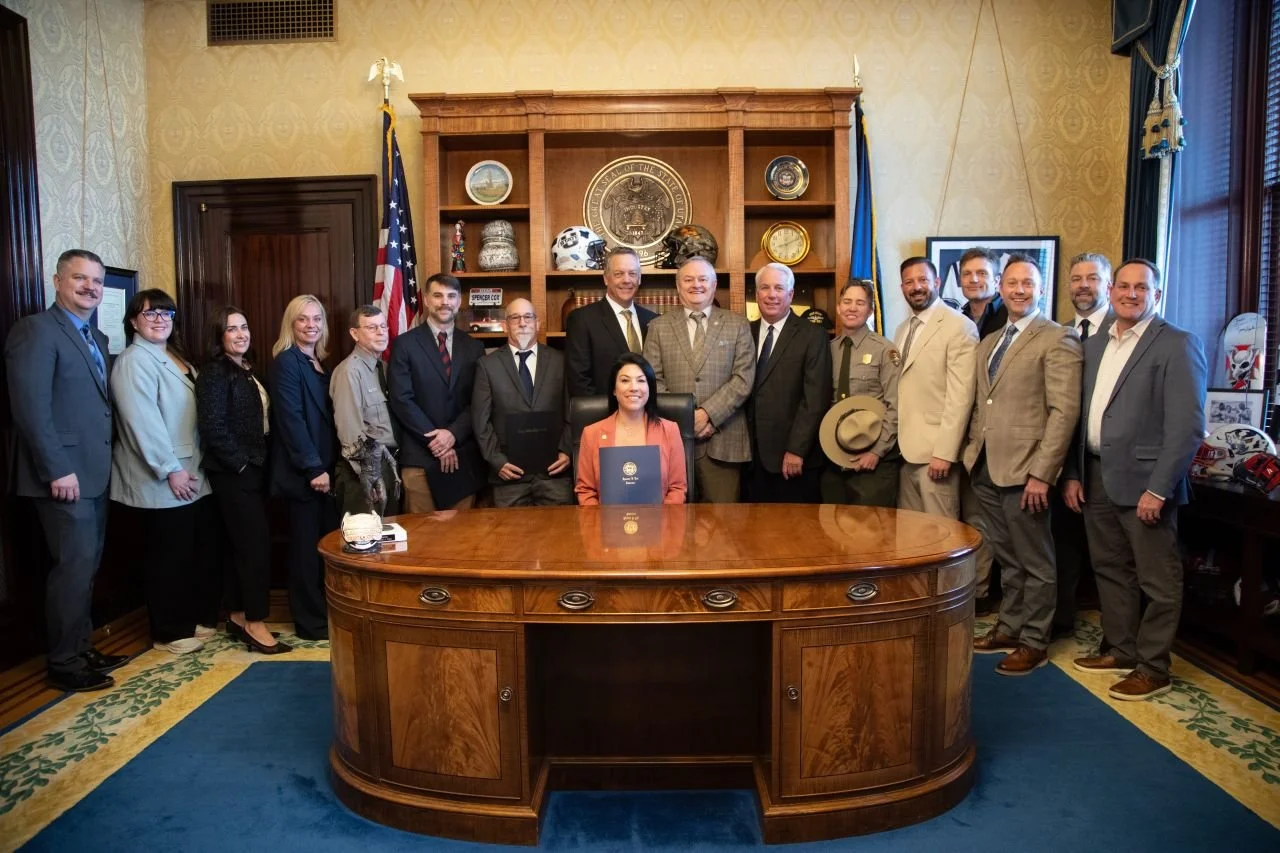
Utah leaders recognize nonprofit partners supporting Zion, Bryce Canyon, Capitol Reef, Arches, and Canyonlands National Parks for their work sustaining park operations and visitor services during the federal government shutdown, including the Zion National Park Forever Project and its partners.
The 2026 Utah legislative session concluded following the Legislature’s 45-day policy cycle.
Morgan May Public Affairs worked with clients across several policy areas this session, including election law, health policy, regulated industries, and public lands issues. While many bills move quickly through the legislative process, the most significant policy debates often continue well beyond the final day of session.
Several issues that shaped the 2026 session are likely to remain part of Utah’s policy landscape moving forward.
Client Policy Areas During the 2026 Session
Utah’s SB54 Election Framework
The 2026 legislative session included renewed debate surrounding Utah’s landmark election reform law, SB54.
Enacted in 2014, SB54 established Utah’s dual-path candidate qualification system, allowing candidates to access the ballot either through the party convention process or by collecting signatures from voters.
More than a decade after its passage, SB54 remains one of the most politically contested pieces of election law in Utah. Proposals affecting the state’s initiative process and candidate qualification system were introduced again during the 2026 session.
However, the core framework established by SB54 remained intact following the session.
Election administration and ballot access policy are expected to remain active areas of discussion in future legislative sessions.
Breast Cancer Screening and Patient Coverage
The 2026 session included several policy discussions related to breast cancer screening and patient access to care.
Legislation adopted during the session directs health plans and state agencies to support expanded mobile mammography screening services, particularly in rural areas where access to screening can be limited.
During the appropriations process, lawmakers also considered a proposal that would have eliminated a specialized Medicaid coverage pathway for certain breast and cervical cancer patients. The proposal ultimately was not adopted in the final state budget, preserving coverage for affected patients.
Together, these developments reflect continued legislative attention to cancer screening access and early detection policy in Utah.
Maternal Health Screening Technology
Policymakers and health stakeholders also began exploring emerging maternal health screening technologies aimed at improving pregnancy and neonatal outcomes.
As these technologies continue to develop, discussions around potential policy frameworks for expanding access to maternal health screening tools are expected to continue in the months ahead.
Utah’s Medical Cannabis Program
Utah’s medical cannabis program saw several legislative updates during the 2026 session.
Lawmakers adopted statutory and administrative changes affecting program governance, regulatory oversight, and licensing structures.
At the same time, proposals that could have imposed more significant operational restrictions on the industry were discussed but ultimately did not advance during the session.
The outcome left the core structure of Utah’s medical cannabis program largely unchanged while clarifying certain regulatory authorities.
National Parks and Utah’s Outdoor Recreation Economy
The Legislature also recognized the role nonprofit partners play in supporting Utah’s national parks and gateway communities.
State leaders issued formal recognition of nonprofit organizations that help sustain visitor services, stewardship programs, and conservation efforts across Utah’s national parks.
The recognition highlighted the important role these organizations played during the recent federal government shutdown, when nonprofit partners helped maintain visitor services and assist park operations despite limited federal staffing.
At the same time, policymakers began discussions around potential future transportation and infrastructure investments affecting Zion National Park and surrounding gateway communities.
What to Watch Moving Forward
Although the legislative session has ended, Utah’s policy development process continues throughout the year.
During the coming months, lawmakers will begin reviewing policy issues through the interim committee process while state agencies begin implementing legislation passed during the session.
For organizations operating in Utah, the period between sessions often provides the most effective opportunity to engage policymakers, develop legislation, and prepare for future policy debates.
